

Federal Reserve Injects $16 Billion into US Financial System Amid Market Volatility and Geopolitical Tensions
• From trending topic: Fed injecting $16 billion into US economy
Summary
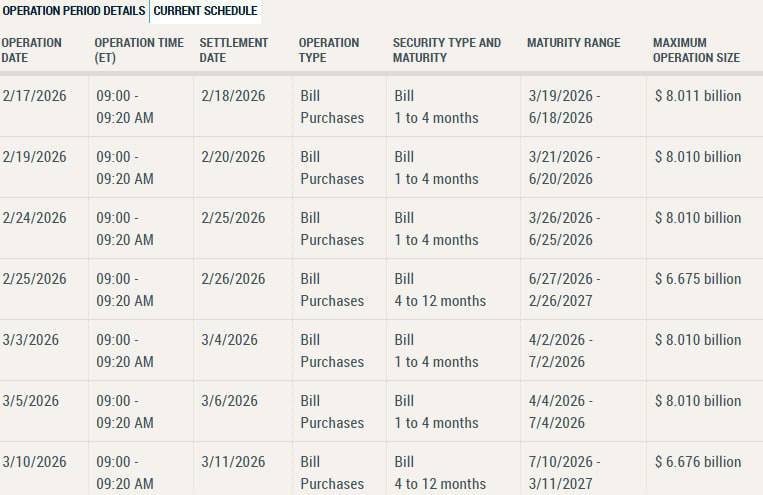
The Federal Reserve's New York branch announced it is injecting $16 billion into the US financial system through its overnight reverse repurchase agreement (ON-RRP) operation, a routine liquidity tool that has sparked widespread discussion on X (formerly Twitter) today. This specific injection, part of the Fed's daily operations to manage short-term interest rates and ensure smooth market functioning, trended due to a confluence of real-time market pressures: surging energy prices from Middle East tensions (including disruptions near the Strait of Hormuz and Qatar LNG supplies), elevated US debt levels, and perceptions of an escalating "war" environment influencing global trade. Social media buzz exploded with posts misinterpreting the move as emergency stimulus or quantitative easing (QE), with some users hyping it as a "whopping" $16 billion market booster and others questioning its relevance amid supply shocks that money printing can't resolve. The operation follows similar recent injections (like an $8.01 billion one noted in posts), occurring against a backdrop of a near-year-high US dollar ($DXY), stable energy sector stocks ($XLE), and downward pressure on gold and silver prices despite debt concerns. This isn't a policy shift from the Fed's current stance—no rate cuts are signaled—but its timing amid these tensions has fueled viral speculation, driving the topic to trend as traders and commentators debate its implications for liquidity, inflation, and economic resilience.
Common Perspectives
Bullish Market Catalyst
Many users on X hailed the $16 billion injection as a massive bullish signal, predicting an imminent "market surge" for stocks, the USD, and broader financial assets. Posts framed it as part of a larger QE-like program (some citing $53 billion totals), urging investors to "get ready" for explosive growth in cash flow and sectors like energy, viewing it as the Fed proactively fueling economic momentum.
Ineffective Against Supply Shocks
Critics argue the liquidity boost addresses the wrong problem, emphasizing that the real issue is a "supply shock" from geopolitical events—like restricted Qatar LNG flows or Hormuz Strait risks—that extra dollars can't fix. They note rate cut expectations are fading, the dollar's strength persists, and such injections won't "reopen" critical trade routes, positioning it as a futile band-aid amid war-like conditions.
Sign of Economic Desperation in Wartime
A prominent viewpoint ties the injection to broader crises, with users pointing out "we're at war" alongside "out of control" US debt, sarcastically noting gold and silver prices remain suppressed on "fake" charts. This perspective sees the move as a desperate Fed response to instability, questioning why liquidity is needed if prior planning assured smooth sailing.
Consumer and Sector Impact Analyzer
Some seek balanced breakdowns, asking for pros/cons on consumers (e.g., cheaper borrowing), real estate (boosted demand), inflation (risk of rises), and overall growth. They view the injection as a short-term stabilizer but worry it could exacerbate inflation without addressing root causes like energy costs.
A Different View
While most discourse fixates on the $16 billion as either a heroic stimulus or pointless gesture, consider its role in quietly reinforcing the Fed's balance sheet unwind (quantitative tightening). This injection via ON-RRP actually absorbs excess liquidity from money market funds—countering inflation by parking funds at the Fed's offered rate—rather than flooding the economy anew. In the context of today's trends, it subtly signals confidence in handling war-driven volatility without panic measures, potentially stabilizing repo markets to prevent the kind of 2019 funding squeezes that could cascade into real estate freezes or consumer credit crunches. This technical nuance flips the narrative from "injection frenzy" to a precise valve maintaining plumbing amid global shocks.
Conclusion
As X debates rage over the Fed's $16 billion move, it underscores the market's hair-trigger sensitivity to liquidity signals amid geopolitical storms. Whether viewed as a surge starter or sidestepped solution, this event highlights the Fed's pivotal, if unglamorous, role in navigating uncertainty—keeping eyes on upcoming operations and energy headlines for the next twist.
Sources and discussion
These public posts were collected while researching this story. They provide context and reactions, but may not independently verify every claim.
View the original topic on XDerek Perea
@SeniorPerea
@Kalshi Wait.. I thought we thought this war through and everything was going smoothly 😕. Now the Fed is injecting 16 billion into the US economy?
Mar 3, 2026AlphaIntercept
@AlphaIntercept
Fed injecting $16 billion into the economy today. The problem isn't liquidity. It's a supply shock the Fed can't fix with money. Rate cut bets still being priced out. Dollar at a near-year high. More dollars in the system doesn't reopen Qatar LNG or clear Hormuz. $XLE $DXY
Mar 3, 2026Be Non Human ®
@BeNonHuman
@Kalshi @grok explain the pros and cons of the Fed injecting $16 billion into US Economy and how does it affect consumers, real estate, inflation and economic?
Mar 3, 2026cryptosuk@
@cryptosuka_
🚨 HUGE NEWS ALERT! 🚨 The 🇺🇸 Fed is injecting a WHOPPING $16 BILLION into the economy this week! Get ready for a MARKET SURGE! 📈💎 This is BULLISH for $USD and the entire financial landscape! 🔥
Mar 3, 2026cryptosuk@
@cryptosuka_
🚨 MASSIVE NEWS! 🇺🇸 The FED is injecting a WHOPPING $8.01 BILLION tomorrow at 9:00 AM ET! A $53 BILLION QE program is here to BOOST the economy! 🚀💎 Get ready for a MARKET SURGE! 🔥 #Bullish #CashFlow
Mar 2, 2026Q_🤍
@its_q_bbyyy
The Fed is injecting another $16 billion into the "economy" - we're at war - debt is out of control and the price of Gold & Silver are...(checks fake n ghey paper charts)...down.
Mar 3, 202634 likes2 reposts