

Crystal Palace Fans Claim "Champions of Europe" Title After Conference League Victory Sparks Debate
• From trending topic: Crystal Palace Wins UEFA Conference League
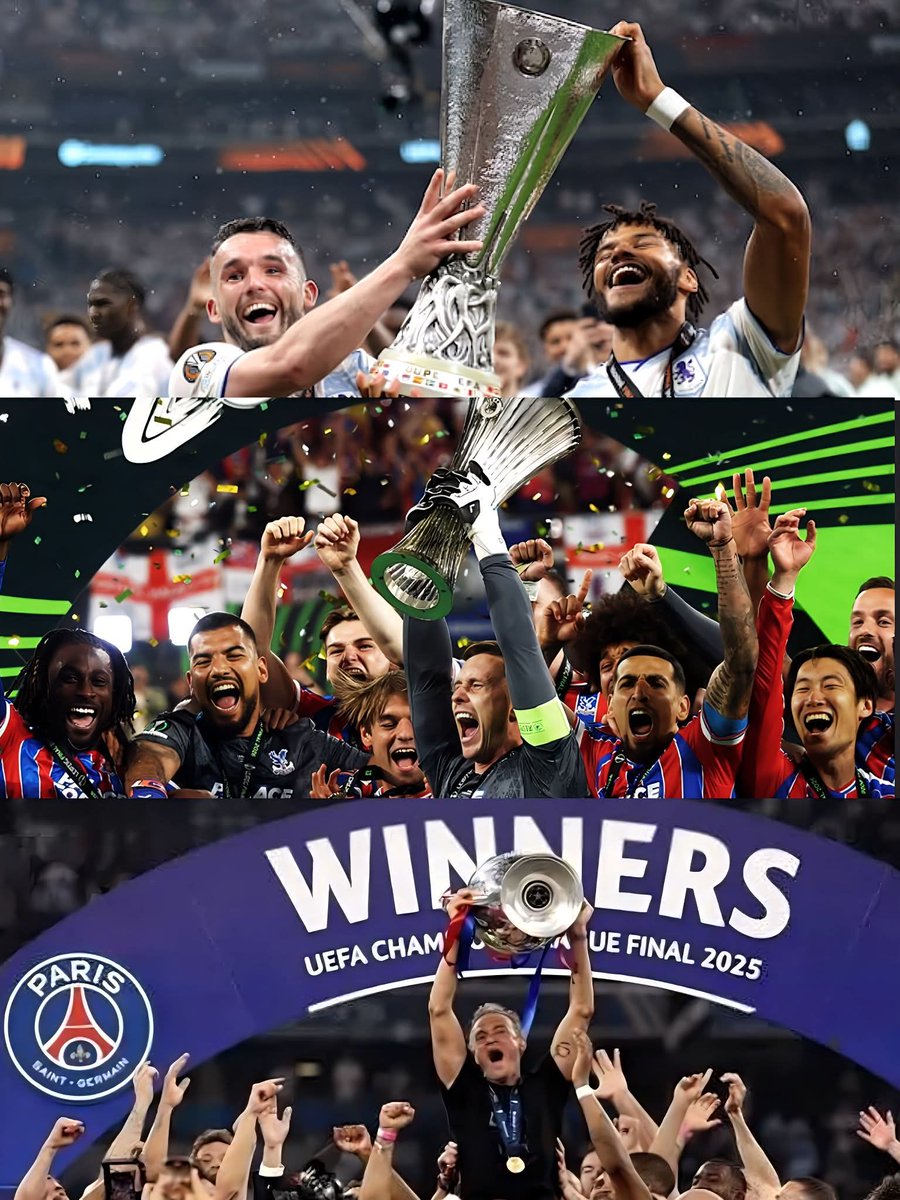
Summary
Right now, Crystal Palace supporters are celebrating their club's first European trophy with the phrase "Champions of Europe," triggering a viral debate across social media. The trend emerged immediately following the final when Palace fans began posting celebratory messages using the hashtag #CPFC alongside phrases like "Champions of Europe!!! 🏆🦅" and "The Eagles have done it! Conference League winners!!! First European trophy in the club's history!!!" This sparked immediate pushback from rival supporters who argue that only Champions League winners should claim the title, with comments like "Champions of Conference League. The Champions of Europe title is reserved for the winner of the Champions League" and comparisons to winning lower-tier domestic trophies. The controversy intensified as some noted that Aston Villa and Paris Saint-Germain are also being referred to as "Champions of Europe" despite competing in the same competition, while Arsenal fans expressed frustration about being left out of European silverware despite their higher league standing. The timing of this debate coincides with discussions about nine English clubs qualifying for European football next season, highlighting the unusual situation where multiple teams from the same league are simultaneously claiming European champion status through different competitions.
Common Perspectives
The Celebration Perspective
Palace supporters and neutral observers maintain that winning any European competition warrants the "Champions of Europe" title, viewing it as legitimate recognition of their achievement. They emphasize this being the club's first European trophy and argue that the accomplishment deserves celebration regardless of the competition's tier. This perspective focuses on the historic nature of the win for a club without previous European pedigree.
The Hierarchy Perspective
Critics argue that the "Champions of Europe" designation should be reserved exclusively for Champions League winners, comparing Conference League success to winning domestic lower-tier competitions. They contend that using the title for Conference League winners dilutes its meaning and creates confusion for casual fans who might not distinguish between different European competitions. This view emphasizes maintaining clear distinctions between competition levels.
The Context Perspective
Some observers point out the unusual situation where multiple clubs (Palace, Villa, PSG) are simultaneously being called "Champions of Europe," creating what they see as an odd precedent. They note that this creates potential confusion for non-football fans who might encounter these claims without understanding the different European competition structures, and question how this affects the traditional understanding of European football hierarchy.
The Qualification Perspective
A practical viewpoint focuses on the implications for next season's European football, noting that Palace's success guarantees them European competition while questioning whether this achievement reflects the same level of accomplishment as Champions League qualification. This perspective considers the broader landscape of English clubs in Europe and how different qualification paths affect perceptions of success.
A Different View
Rather than debating the legitimacy of titles, this moment reveals how social media has transformed the way football achievements are processed and contested in real-time. The immediate backlash against Palace's celebratory language demonstrates how rival supporters now monitor and respond to opposing fanbases' reactions within minutes of major events, creating a new layer of competition that extends beyond the pitch into digital spaces. This represents a shift from traditional post-match analysis to instantaneous narrative control, where the meaning and significance of sporting achievements are negotiated through viral discourse rather than established media channels.
Conclusion
The current trend surrounding Crystal Palace's European triumph reflects not just a football achievement, but a broader cultural moment where the language of sporting success is being actively redefined through social media interaction. The debate captures how modern football fandom involves not only celebrating victories but also managing the narrative around what those victories mean within an increasingly complex European competition structure.
Sources and discussion
These public posts were collected while researching this story. They provide context and reactions, but may not independently verify every claim.
View the original topic on XSports Lauge
@ExotiC20000
Crystal Palace, Champions of Europe!!! 🏆🦅 The Eagles have done it! Conference League winners!!! First European trophy in the club's history!!! What a night!!! #CPFC #UECLFinal
May 27, 20261 likesSamuel
@SamuelAudu29494
🚨🚨| These are your Champions of Europe Aston Villa Crystal Palace Paris Staint-Germain Arsenal can keep on dreaming of a European trophy ☺️ #mufc
May 27, 20261 likesMwepuMagic
@MwepuMagic
Winning the Conference League and calling yourself the Champions of Europe is like winning the Vertu Trophy and calling yourself Champions of England😂😭
May 27, 20261 likesCroatian Sensation 🇭🇷✝️
@MeatTheDude
@CPFC Champions of Conference League. The Champions of Europe title is reserved for the winner of the Champions League. Or are they world champions? :)
May 27, 2026Schrödinger
@Shrodinger0
So if Arsenal wins Champions league then UK sits on the throne of Europe
May 27, 2026MH7 (fan)
@mh7ftbl_
Imagine you're a non-football fan and only know about UCL and watch Crystal Palace as champions of Europe 😭✌️
May 27, 2026