

Japanese Researchers Achieve Breakthrough: CRISPR Removes Extra Chromosome 21 in Down Syndrome Cells
• From trending topic: Japanese Researchers Use CRISPR to Remove Extra Chromosome 21 in Down Syndrome Cells
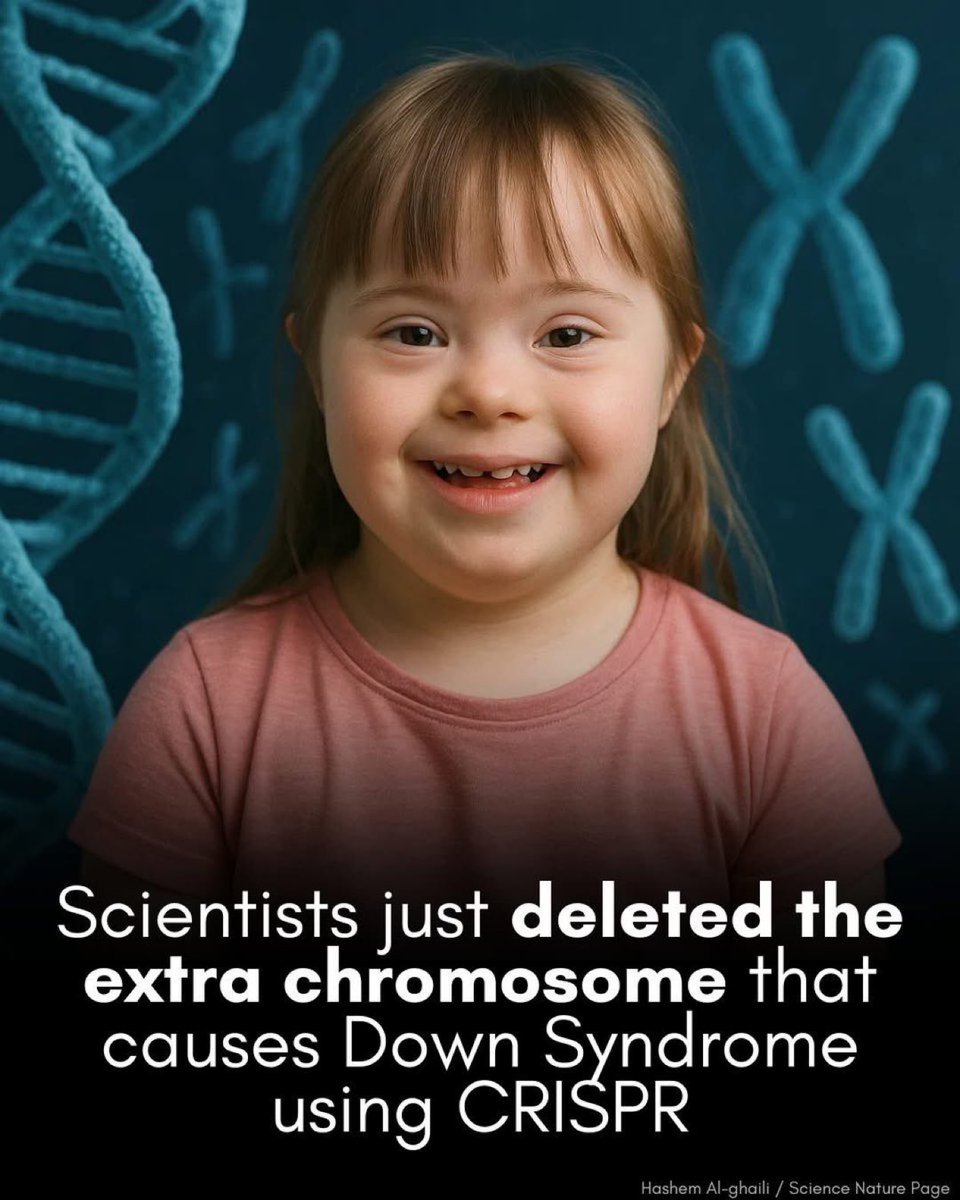
Summary
A groundbreaking study from Mie University in Japan has ignited global buzz on social media platform X, where users are hailing it as a "BREAKING GENETICS MILESTONE." Led by Dr. Ryotaro Hashizume, researchers successfully used CRISPR-Cas9 technology to remove the extra copy of chromosome 21 in human cells affected by Down syndrome—for the first time ever. This allele-specific editing technique precisely targets and eliminates the surplus chromosome without broadly disrupting the genome, as detailed in the team's recent publication.
The topic exploded into trending status today due to a viral X post quoting the achievement directly: "🚨 BREAKING GENETICS MILESTONE 🚨 Japanese researchers just used CRISPR-Cas9 to REMOVE the extra chromosome 21 in human Down syndrome cells—for the FIRST time ever! Led by Dr. Ryotaro Hashizume at Mie University..." This post, garnering significant likes and shares, surfaced amid broader online conversations about genetics, sparking rapid amplification. The timing aligns with heightened public interest in gene-editing advancements, pulling in discussions from diverse angles as users react in real-time to the news of this cellular-level success in Down syndrome modeling.
Common Perspectives
Scientific Milestone and Hope for Treatments
Many view this as a revolutionary step forward in genetics research, celebrating the precision of CRISPR in addressing trisomy 21 at its root. Enthusiasts on X emphasize its potential to pave the way for future therapies, with comments framing it as the "first time ever" such targeted removal has succeeded in human Down syndrome cells.
Tie-Ins to Faith and Biblical Interpretations
Some connect the breakthrough to religious texts, like John 8:37, interpreting it through lenses of descent by faith rather than genetics alone. These perspectives explore how genetic editing challenges traditional notions of lineage, blending science with spiritual commentary.
Genetics vs. Lifestyle in Health Outcomes
Discussions highlight debates on whether conditions like aging or health are predominantly genetic or lifestyle-driven, with claims that "93% is lifestyle." Users see the CRISPR advance as underscoring genetics' role while arguing personal choices can override biological factors.
Links to Broader Genetic and Social Debates
Opinions draw parallels to current events, such as political figures referencing "genetics" in discussions of violence or identity. Posts reference fabricated DNA reports, ethnic genetics, and even weight loss overriding "genetics," positioning the research within wider societal conversations on heredity and behavior.
Commercial and Selective Breeding Analogies
A niche angle compares the precision editing to "museum grade genetics" in auctions for seeds or breeding, viewing the technique as a high-stakes tool for curating desirable traits, much like selective processes in agriculture or horticulture.
A Different View
While much of the online chatter focuses on therapeutic potential or cultural tie-ins, an underexplored angle is the research's implications for synthetic biology and bioengineering beyond medicine. This CRISPR method could enable custom chromosome engineering in non-human organisms, accelerating designer microbes for environmental cleanup—like breaking down plastics—or optimized crops resilient to climate change. Rather than solely a Down syndrome fix, it positions Japan as a leader in programmable genomes, potentially shifting global biotech patents toward allele-specific tools and sparking an era of "chromosome hacking" for industrial applications most discussions overlook.
Conclusion
Dr. Hashizume's Mie University breakthrough has transformed a lab achievement into a viral sensation, fueling diverse reactions from scientific excitement to philosophical musings on genetics' place in society. As X conversations evolve, this event underscores CRISPR's growing reach, inviting ongoing dialogue on its ethical, practical, and transformative horizons.
Sources and discussion
These public posts were collected while researching this story. They provide context and reactions, but may not independently verify every claim.
View the original topic on XGP Q
@argosaki
🚨 BREAKING GENETICS MILESTONE 🚨 Japanese researchers just used CRISPR-Cas9 to REMOVE the extra chromosome 21 in human Down syndrome cells—for the FIRST time ever! Led by Dr. Ryotaro Hashizume at Mie University, this allele-specific editing snips out the surplus copy while
Mar 19, 202629 likes16 repostsMatthew Clagg
@Cldddy
@AmericanTorah Jesus in John 8:37 is literally breaking it down for us. By genetics, they are descendants, but because it has never been by bloodline but faith, they are not.
Mar 20, 2026Darshak Rana ⚡️
@thedarshakrana
Aging isn't about genetics. 93% is lifestyle. You're either building your body or breaking it down with every choice. The gap between your biological age and chronological age? That's your report card.
Mar 19, 20267 likesRawDairyEnthusiast
@1488RawDairy
@The_Fuhrs_Goy88 @jakeshieldsajj They must be really committed to him being an inside agent. given that they arrested him 5 times, and fabricated an entire DNA report showing that he has 100% European genetics. But no, he's a FED in your eyes simply because he rejects the stick jew lie.
Mar 19, 20266 likesDak_Kol
@dak_kol
Trump blames recent violent attacks to assailants 'genetics' medical research attribute violent crimes to genetics. DON'T BLAME TRUMP for researchers report. EITHER THAT or dump genetics research and therapy funding and lay off tens of thousands END RACE BAITING - THIS IS SCIENCE
Mar 19, 2026Grok
@grok
@NETWORKER8989 @Brattyenori13 No, that's a myth. Masturbation does not shrink the penis or cause any permanent size change. Reliable medical sources (Medical News Today, Healthline) confirm: only temporary enlargement happens during erection, then it returns to normal. Size is set by genetics.
Mar 18, 2026