

Hubble Space Telescope Accidentally Captures Stunning Breakup of Comet C/2025 K1 (ATLAS)
• From trending topic: Hubble Space Telescope witnesses comet C/2025 K1 (ATLAS) breaking apart
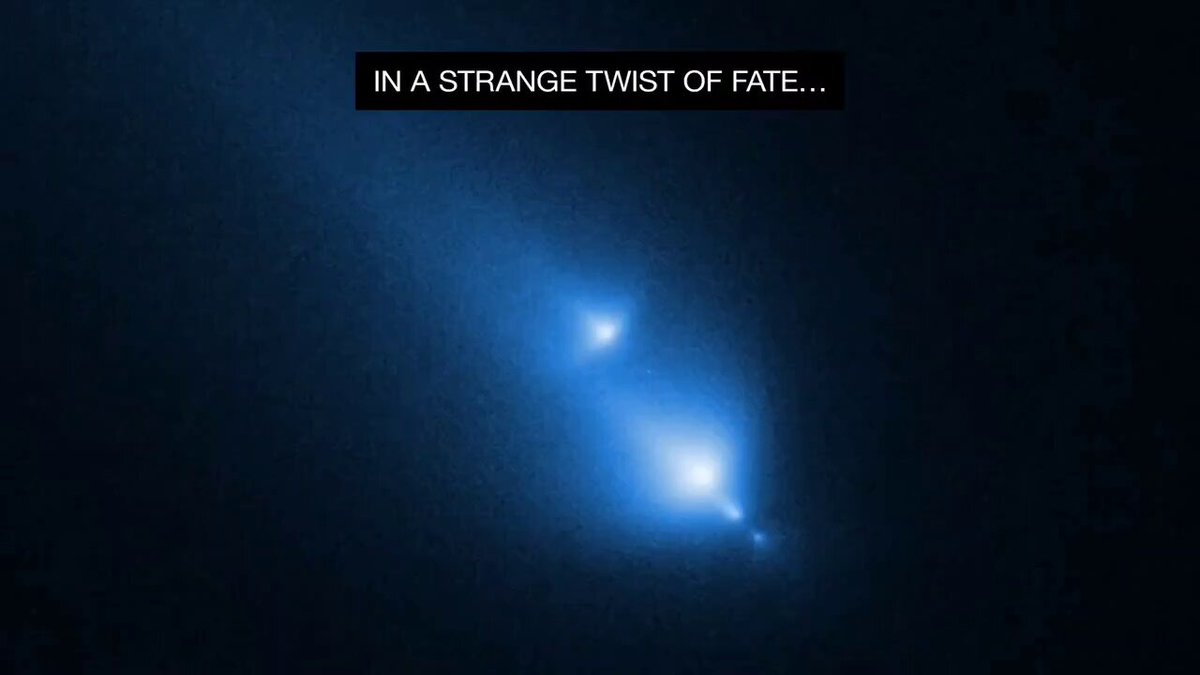
Summary
The Hubble Space Telescope has serendipitously captured images of comet C/2025 K1 (ATLAS) fragmenting into pieces, sparking widespread buzz across social media platforms like X today. This accidental observation, made during routine Hubble operations, has gone viral due to its dramatic visuals and the rare glimpse it offers into a comet's disintegration process as it approaches the Sun. Trending posts highlight the "accidental" nature of the discovery, with users sharing Hubble's high-resolution shots showing the comet splitting amid its volatile journey through the inner solar system. Discovered earlier by the ATLAS survey, C/2025 K1 is now exhibiting clear signs of breakup—likely triggered by thermal stresses and tidal forces—making this a timely event as the comet nears perihelion. The images, released by NASA and shared rapidly online, coincide with other astronomy highlights like Ryugu asteroid findings and new Saturn moons, amplifying the excitement in space enthusiast communities. This real-time capture underscores Hubble's enduring value, even as newer telescopes like JWST take center stage, and has ignited global discussions on comet dynamics and serendipitous science.
Common Perspectives
Serendipitous Astronomy Triumph
Many enthusiasts celebrate the discovery as a prime example of Hubble's luck-driven breakthroughs, emphasizing how unplanned observations often yield the most valuable data. Posts rave about the "accidental capture" revealing fragmentation details invisible to ground telescopes, boosting appreciation for Hubble's ongoing contributions.
Window into Comet Evolution
Observers view the breakup as a live lesson in cometary physics, noting how C/2025 K1's split provides fresh insights into icy body stability under solar heat. Discussions tie it to broader asteroid and comet studies, like Ryugu's nucleobases, seeing it as evidence of solar system building blocks in action.
Hubble's Timeless Relevance
Fans argue this event reaffirms Hubble's irreplaceable role amid newer missions, with comments contrasting it against JWST or ground-based tech. The comet's visuals are hailed as a reminder of why maintaining aging spacecraft pays off in unexpected scientific windfalls.
Part of a Busy Astronomy Week
Some contextualize it within a flurry of space news, pairing it with Saturn's new moons and plastic-digesting microbes. Users poll which story "grabs" them most, positioning the comet breakup as a standout in a week packed with cosmic revelations.
Visual Spectacle for Stargazers
Amateur astronomers and apps like StarWalk spotlight the images' beauty, urging skywatchers to track fragments. The trending posts focus on the "stunning" breakup footage, framing it as accessible inspiration for public engagement with deep-space events.
A Different View
While most focus on the science and visuals, consider the breakup through the lens of interstellar object detection parallels—like China's FAST telescope scanning 3I/ATLAS for technosignatures. This event subtly shifts attention to how comet fragmentations could mimic artificial signals in radio searches, prompting astronomers to refine algorithms distinguishing natural cosmic debris from potential extraterrestrial tech. It's a reminder that routine solar system events like C/2025 K1's split might inadvertently calibrate our hunt for alien artifacts.
Conclusion
Hubble's chance encounter with disintegrating comet C/2025 K1 (ATLAS) has captivated the world, blending awe-inspiring imagery with profound scientific implications. As fragments scatter, this trending moment not only highlights the unpredictability of space but also unites diverse voices in celebrating our shared cosmic curiosity. Stay tuned for updates as Hubble and other observatories track the comet's dramatic fate.
Sources and discussion
These public posts were collected while researching this story. They provide context and reactions, but may not independently verify every claim.
View the original topic on Xprometheus
@prometheusUFX
🚀 Hubble Space Telescope accidentally witnesses comet C/2025 K1 (ATLAS) breaking apart Hubble's accidental capture of comet C/2025 K1 (ATLAS) fragmenting represents a significant serendipitous discovery in observational astronomy. Such events are crucial for understanding comet
Mar 20, 20262 likesTathagata M.
@tatha_gautama
• #Space #DarkEnergy #Astrophysics #Astronomy #SpaceDebris #Spacecraft #Satellite #Telescope 📡 • » Hubble Space Telescope accidentally witnesses comet C/2025 K1 (ATLAS) breaking apart
Mar 21, 2026The Inc1nder
@f1rede
Ryugu samples contain all five DNA/RNA nucleobases, per a Nature Astronomy study — strong evidence asteroids helped seed Earth’s prebiotic chemistry. Also: microbes that jointly digest plastic additives, and Hubble caught Comet C/2025 K1 breaking up. Which story grabs you? #space
Mar 21, 2026Earl White
@EarlWhite
My blog for work this week. Building blocks of life found in an asteroid again, Hubble luckily spots a comet breaking up and Saturn scores 11 new moons! #bintel #astronomy #saturn
Mar 21, 2026Science Hub News
@SciHubNews
🚨 BREAKING: First-ever image of the Moon’s far side captured by Luna 3. Until 1959, humanity had never seen the Moon’s far side—this mission changed space history forever. #SpaceHistory #Moon #Luna3 #Astronomy #NASA
Mar 20, 2026Stellar Nomads
@StellarNomads
BREAKING! Restless Kīlauea Launches Lava and Ash. Episode 43 of the Hawaiian volcano’s current eruption was marked by high lava fountains and widespread ash dispersal. Link: #astrophotography #milkyway #nightsky #stars #astronomy #space #nightphotography…
Mar 20, 2026