

Big 12 Conference Weighs Disciplinary Measures Over Texas Tech’s Brendan Sorsby Dispute
• From trending topic: Big 12 Conference considering action against Texas Tech over Brendan Sorsby situation
Summary
Big 12 athletic directors and university presidents are scheduled to convene this week with the Brendan Sorsby situation at the top of their agenda. Conference bylaws allow presidents and chancellors to impose penalties on member schools for conduct deemed detrimental to the league, and several officials are now openly discussing whether Texas Tech’s handling of the matter warrants such action. The immediate trigger for the emergency talks is mounting frustration among rival programs that have refused to schedule future games against Texas Tech, citing the Sorsby controversy as the reason. Those boycotts have escalated into a broader debate over whether the conference should step in to enforce scheduling commitments or allow member schools to sidestep matchups they view as problematic. The timing of the meeting—coming just weeks before the next round of non-conference scheduling windows—has turned what began as an isolated dispute into a league-wide crisis that could reshape how the Big 12 manages internal conflicts.
Common Perspectives
The “Protect Conference Integrity” View
Several athletic directors argue that the league must act to prevent a precedent in which individual schools can unilaterally decide which opponents they will or will not face. They contend that if member institutions are allowed to opt out of games over off-field disagreements, the conference risks losing its ability to guarantee competitive balance and television inventory.
The “Let Programs Police Themselves” View
A competing camp believes the Big 12 should stay out of the dispute entirely. Proponents of this view say schools already possess the leverage of future scheduling and public pressure; inviting the conference office to hand down formal sanctions would only inflame tensions and potentially expose the league to legal challenges from Texas Tech.
The “Playoff and Revenue Implications” View
Some observers focus on the downstream effects on the College Football Playoff. They note that if enough programs refuse to play Texas Tech, the Red Raiders could end up with an artificially shortened schedule or a de facto boycott that complicates their resume. Under this scenario, conference leaders might consider measures short of expulsion—such as fines or probation—that still signal disapproval without removing Tech from the league’s revenue-sharing model.
The “Political Chess Match” View
A smaller but vocal group frames the controversy as part of a larger power struggle inside the conference. They suggest that influential boosters and administrators are leveraging the Sorsby situation to push Texas Tech toward an exit that would open the door for realignment talks with the SEC or Big Ten. In this reading, the emergency meeting is less about Sorsby and more about reshaping the Big 12’s membership footprint.
A Different View
Rather than treating the standoff as a purely punitive or political matter, some conference insiders are quietly exploring whether the situation could be resolved through a mediated “memorandum of scheduling understanding.” The idea would require Texas Tech and the dissenting schools to agree on a neutral third-party review of the Sorsby allegations in exchange for guaranteed future games. If adopted, the approach would shift the Big 12 from its traditional role as rule-enforcer to that of facilitator—an unusual but potentially precedent-setting move that sidesteps both expulsion threats and outright boycotts.
Conclusion
What began as a single-program controversy has quickly evolved into a test of the Big 12’s collective authority at a moment when conference realignment rumors remain constant. How athletic directors and presidents choose to address the Brendan Sorsby situation this week could determine not only Texas Tech’s immediate scheduling future but also the league’s broader willingness to intervene when member disputes threaten on-field stability.
Sources and discussion
These public posts were collected while researching this story. They provide context and reactions, but may not independently verify every claim.
View the original topic on XMitch Harper
@Mitch_Harper
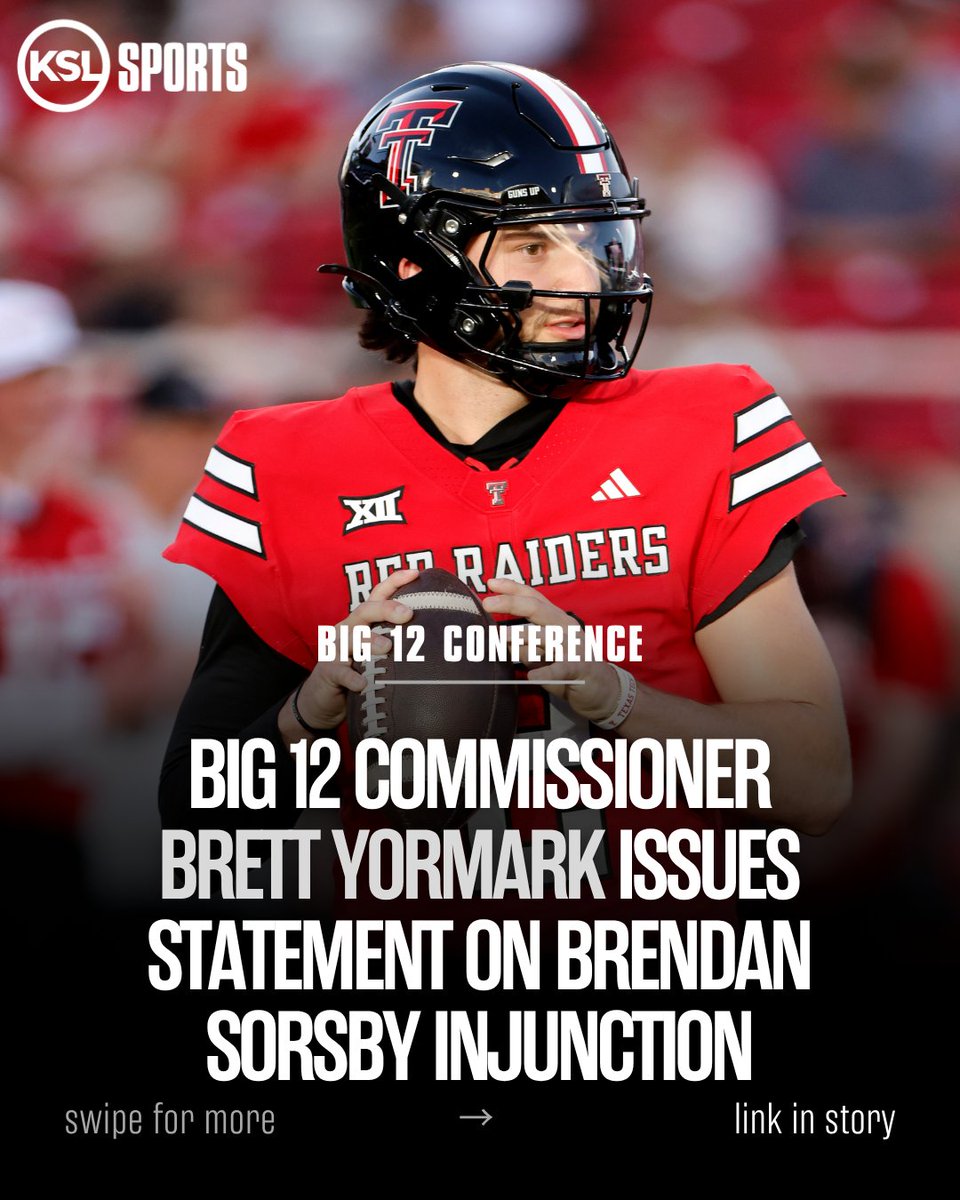
Big 12 Commissioner Brett Yormark's statement on the injunction for Texas Tech QB Brendan Sorsby. @kslsports
Jun 8, 20261 likes2 repostsRoss Dellenger
@RossDellenger
Some updates: Big 12 ADs and presidents are scheduled to meet this week and at the center of those discussions is the Brendan Sorsby situation. Most conference bylaws permit presidents/chancellors to penalize members for conduct/actions detrimental to the league.
Jun 8, 20264 likes3 repostsSean Ridley
@SeanRidley2
@GeorgeStoia Softball & baseball would’ve been the least of my concerns heading to the SEC. Softball team is elite and Big 12 baseball was very good. Tech and TCU have dipped but with them, texass and OSU the conference was tough when they left.
Jun 8, 2026SarkNotSteven
@sulli95916
@achristovichh @FOS I think this is all a ploy to get Tech into the SEC or Big 10 🤣 Cody Campbell is the primary driver behind the legislation that is unfair to the SEC/Big 10… Now, with Yormark taking a stance against Sorsby/Tech, Campbell could surely force Tech out of the Big 12 and quid pro
Jun 8, 2026sean kelly
@skelly54
@SchutteDustin Or the CFP could just not invite Texas Tech to the playoffs (unless it wins the Big 12) There’s no legal standing that says they have to invite them (or anyone) It’s their playoff.
Jun 8, 2026MT
@MT_46Falcon
@RossDellenger @YahooSports Sorsby trying to figure out how he can make a parlay out of Big 12 teams playing or not playing Tech……
Jun 8, 2026