

AFL Tribunal Clears Billy Frampton as Collingwood Defender Avoids Ban Over Mihocek Neck Injury
• From trending topic: AFL Tribunal clears Billy Frampton over Mihocek neck injury tackle
Summary
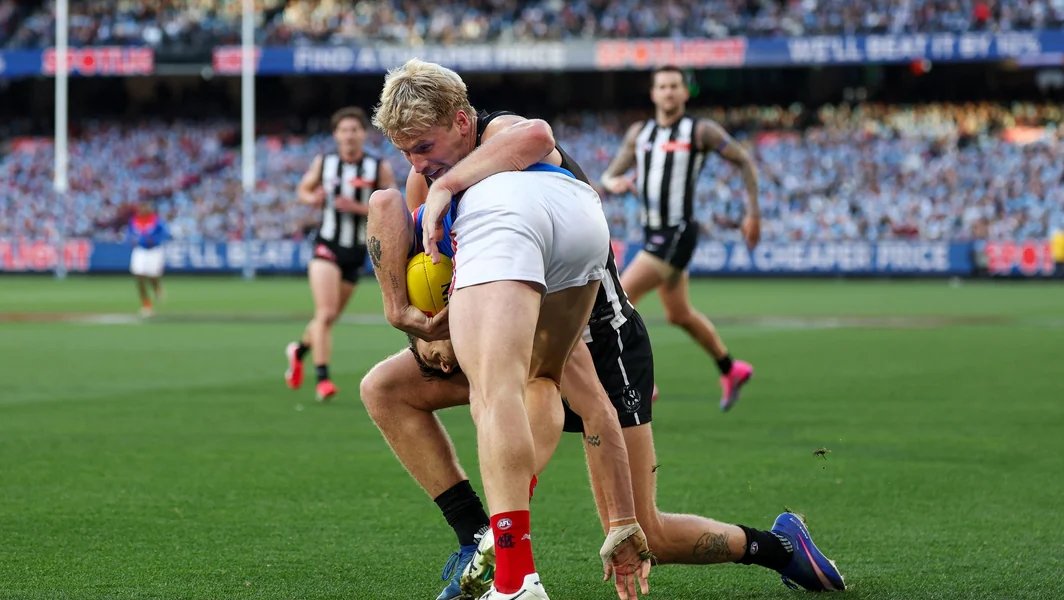
The AFL Tribunal has just cleared Collingwood defender Billy Frampton of a rough conduct charge stemming from his King's Birthday clash tackle on Melbourne forward Brody Mihocek, who suffered a fractured neck requiring surgery and will miss the remainder of the season. The decision, handed down tonight, means Frampton is free to play in the Magpies' next match rather than facing the three-match ban originally proposed. The ruling has ignited immediate debate across Australian football circles, with social media erupting as fans, players, and commentators react to the tribunal's determination that Mihocek's stumble and forward momentum contributed significantly to the injury outcome. The case has become a flashpoint in broader discussions about how the AFL Tribunal weighs tackle execution against player positioning and accidental factors when determining sanctions.
Common Perspectives
Tribunal Got It Right Based on Contributing Factors
Many observers agree with the tribunal's assessment that Mihocek's stumble fundamentally altered the tackle dynamics, making Frampton's actions unavoidable. Supporters of this view point out that the defender was facing backwards when contact occurred and had no opportunity to adjust his technique once Mihocek fell forward. They argue the tribunal correctly distinguished between deliberate dangerous tackles and unavoidable accidents where both players' movements combined to create an unfortunate outcome.
Collingwood Bias Influences Tribunal Decisions
Critics contend the outcome reflects favoritism toward Victorian clubs, particularly high-profile teams like Collingwood. This perspective highlights perceived inconsistencies, such as quicker sanctions against non-Victorian players for seemingly lesser incidents, and suggests the tribunal's makeup and location create structural advantages for certain clubs. Commentators in this camp point to the broader pattern of Victorian teams receiving favorable rulings as evidence the system lacks impartiality.
The Charge Should Never Have Been Laid
A significant portion of the discussion argues Frampton should not have been reported in the first place, characterizing the incident as a standard football act rather than rough conduct. This view emphasizes that contact occurred during a legitimate tackle attempt, with Frampton's immediate reaction showing genuine concern rather than malice. Advocates maintain that if this is deemed reportable, the game itself becomes impossible to play without constant tribunal intervention.
Mihocek's Actions Directly Caused the Injury Severity
Some maintain that Mihocek's decision to drive through the tackle after stumbling was the primary factor in his neck fracture. This perspective focuses on how his forward momentum and head position, rather than Frampton's tackle technique, created the conditions for serious injury. Supporters argue this represents an unfortunate accident inherent to contact sport rather than any wrongdoing by the defender.
A Different View
What if this incident reveals something deeper about how the modern game has evolved beyond the physical limits of human reaction time? Rather than debating whether Frampton was careless or Mihocek contributed, consider that both players were operating within milliseconds of decisions made at speeds the brain cannot consciously process. The tackle wasn't a failure of intent or technique—it was the inevitable collision of two athletes moving faster than their protective instincts can respond. The tribunal's decision may actually acknowledge that some injuries in elite sport now occur in the gap between human capability and game demands, a space where traditional notions of "careless" or "reckless" no longer apply because neither player had meaningful control over the outcome once the sequence began.
Conclusion
The Frampton clearance sits at the intersection of player safety concerns, tribunal consistency questions, and the fundamental nature of contact sport itself. Whether viewed as correct application of evidence, institutional bias, or recognition that some football injuries transcend individual accountability, tonight's decision ensures the conversation about how the AFL balances spectacle, safety, and fairness will continue long after both players return to the field.
Sources and discussion
These public posts were collected while researching this story. They provide context and reactions, but may not independently verify every claim.
View the original topic on XFooty Rules!
@aussierules2023
The @AFLTribunal based the Frampton tackle on outcome not Mihocek contributing to his neck injury by stumbling and then leading with his head. The @AFL have had a terrible year with stuff up after stuff up. Here’s another! What’s your thoughts @ScottyCummings_ ?
Jun 10, 2026Jeeves
@JeevesCarruso
@allstarpie42 @AFL Of course it does. You were referring to an incident involving Frampton and Mihocek where Mihocek received a fractured neck in a tackle. Mihocek now plays for Melbourne but if he was still playing for the Pies I doubt you would be saying common sense prevails. Get it now? 🤡
Jun 10, 20262 likesAFL News, Results & Rumors
@RumorsAFL1993
Billy Frampton's rough conduct charge has been dropped at the Tribunal tonight, with the Collingwood defender free to play in the Magpies' next match. Frampton was facing a three-match ban for his King's Birthday tackle on Brody Mihocek that left the Melbourne forward with a...
Jun 10, 20261 likesowen jones art
@last_jones
The Vic. AFL is the most crooked game in the world. Crows Tex Walker. get a one-match ban for a little push. And a Collingwood player nearly broke a player's neck and got off. Pies defender learns Tribunal fate for Mihocek tackle. The Victorian board is as crooked as a dogs leg.
Jun 10, 2026justmyopinion
@hayphil55
@FOXFOOTY I am a Bombers Fan and I agree with Frampton, going in for the tackle was correct, but when Mihocek stumbled and falling off balance forward, the normal tackle process had changed dramatically by both players. I believe the AFL Tribunal has come to the correct decision. Well done
Jun 10, 2026Game Day Edition
@gamedayedition
@AFL Correct call made. There is nothing else Frampton could have done in that situation. It's not your classic pile driver type tackle, he was facing backwards and they both fell in that direction. Best outcome for all. Mihocek is going to be okay, and Frampton doesn't get banned.
Jun 10, 20263 likes