

2026 FIFA World Cup US Matches Face Low Ticket Sales and Lagging Hotel Bookings Amid Rising Concerns
• From trending topic: BREAKING: Low ticket sales and lagging bookings for 2026 FIFA World Cup US matches
Summary
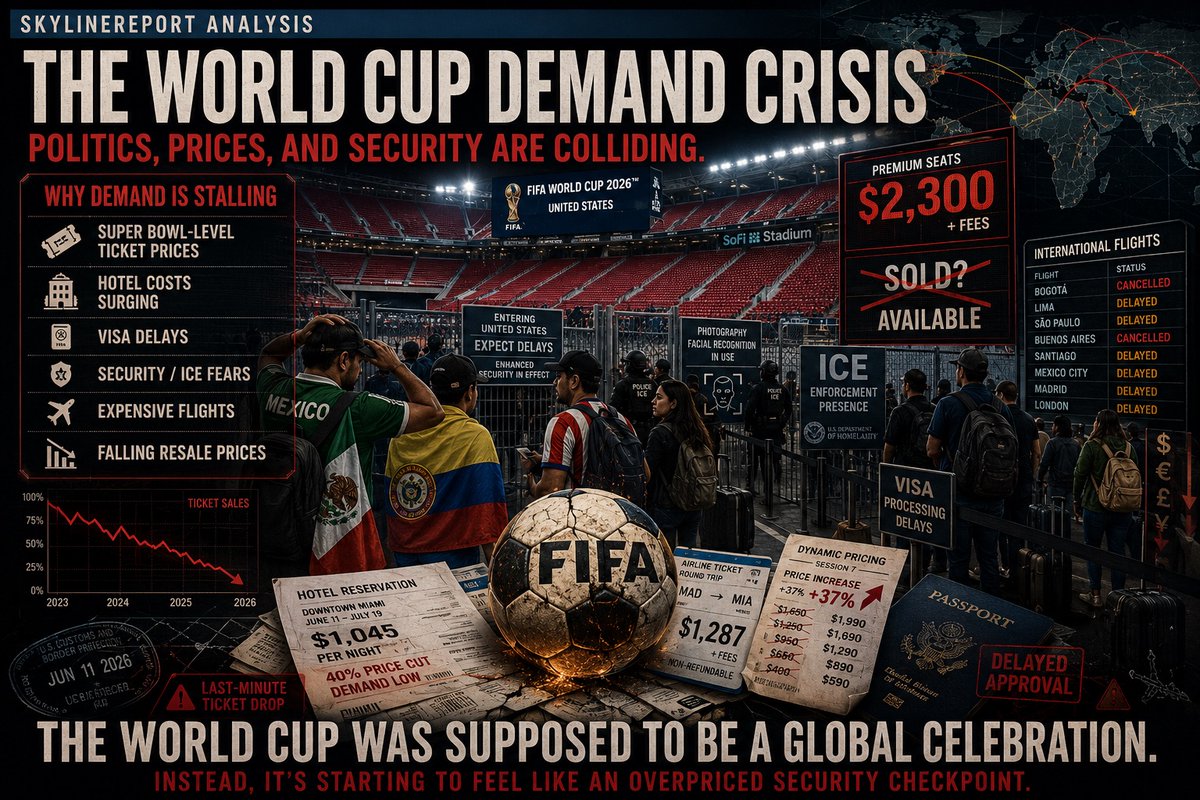
A breaking report circulating widely on X (formerly Twitter) has ignited urgent discussions about the 2026 FIFA World Cup, spotlighting unexpectedly low ticket sales and lagging hotel bookings for matches hosted in the United States. The trend exploded today due to a viral post claiming "BREAKING: Politics and security fears are starting to hit the 2026 FIFA World Cup," which detailed FIFA's anticipated "global stampede" for U.S. matches failing to materialize. Key indicators include thousands of seats remaining unsold, sharply reduced hotel bookings in host cities, plummeting resale ticket prices, and quiet concerns from local organizers (garnering over 130 likes and rapid shares). This revelation comes at a tense moment in global politics, with users linking the slump to fears over U.S. political instability, heightened security risks from international tensions, and broader geopolitical uncertainties—such as ongoing conflicts and shifting alliances—that are deterring overseas fans from committing to travel plans. While ticket sales officially launched earlier this year, this specific alert highlights a sudden stall in momentum, prompting host cities like Los Angeles, New York, and Miami to reassess strategies just months ahead of the tournament's kickoff across 16 U.S. venues (plus others in Canada and Mexico).
Common Perspectives
Politics and Security Fears Deter International Fans
Many on X attribute the sales dip directly to U.S. political volatility and security worries, arguing that potential unrest or strict entry policies under current leadership are scaring off fans from Europe, South America, and Asia, who see the risks outweighing the excitement of attending.
Overhyped Expectations from FIFA
Some users point out that FIFA's aggressive marketing created unrealistic hype for a "stampede," but practical barriers like high costs, long travel distances across U.S. host cities, and economic pressures globally are the real culprits, not politics—echoing past World Cups where initial buzz faded.
Host City Preparedness and Infrastructure Issues
Local stakeholders and commenters express frustration with U.S. host cities' logistics, noting insufficient hotel capacity, poor public transport links between stadiums, and rising living costs as key factors quietly alarming organizers and contributing to the booking lag.
Economic Slowdown Impacting Global Travel
A segment ties the trend to broader market jitters, including investor caution amid global political shifts (e.g., election outcomes in Australia and Europe), which are crimping disposable income for fans and leading to resale price drops as secondary markets flood with unsold inventory.
Geopolitical Tensions Amplifying Boycott Calls
Discussions reference interconnected global events—like statements on Ukraine and U.S. foreign policy debates—as fueling organized hesitancy or informal boycotts from certain regions, framing the World Cup as entangled in larger power struggles.
A Different View
While most focus on fear-driven declines, an overlooked angle is the rise of virtual and hybrid fan experiences: tech-savvy younger demographics (Gen Z and Alpha) are opting for immersive VR broadcasts, metaverse watch parties, and AI-enhanced replays over costly international travel. Platforms like Roblox and emerging Web3 ticketing are already hosting mock World Cup events with millions of participants, suggesting low physical sales signal a paradigm shift toward digital fandom rather than outright rejection—potentially saving host cities billions while redefining soccer's global reach.
Conclusion
As this breaking story dominates X feeds, the 2026 World Cup's U.S. leg hangs in the balance, with politics, economics, and logistics colliding at a critical juncture. Whether organizers pivot with incentives like bundled travel packages or lean into digital innovations, the coming months will test FIFA's adaptability in a fractured world, turning a sales slump into a pivotal moment for the sport's future. Stay tuned to The NOW Times for updates.
Sources and discussion
These public posts were collected while researching this story. They provide context and reactions, but may not independently verify every claim.
View the original topic on XP a u l ◉
@SkylineReport
BREAKING: Politics and security fears are starting to hit the 2026 FIFA World Cup. FIFA expected a global stampede for U.S. matches. Instead: • thousands of seats remain unsold • hotel bookings are lagging badly • resale prices are falling • and some host cities are quietly
May 10, 2026133 likes73 repostsGlobal Banking & Finance Review
@GBAFReview
Report from Global Banking & Finance Review Australia’s far-right gains first lower-house seat amid shifting global politics — what it means for markets, policy risk, and investor outlook. Stay informed, assess risk, and diversify. #GlobalPolitics #Marke…
May 9, 2026Ask.Khani
@ask_khani
Is Trump Betraying Humanity for Oil? how far will world leaders go to protect power, money, and global influence? #Trump #Oil #Politics #Geopolitics #WorldNews #MiddleEast #Power #History #GlobalPolitics #USA #Iran #News #AskKhani
May 8, 2026John Sorrell
@CamperVanMan61
@DamianLow3 Well given you think that the Hungary election is good news for Europe and not Putin just goes to show you know nothing about global politics and therefore your comments about Farage are not to be believed. You’re an idiot, never forget that!
May 10, 2026OfficialWire
@owglobal
OfficialWire is an international media and news network built upon the legacy of the original OfficialWire brand established in April 2001. Delivering news, commentary, and global perspectives across politics, business, culture, and world affairs.
May 10, 20264 likes4 repostsThe American Update
@theAmericanUpd
📷 AMERICAN UPDATE NEWSFLASH | MAY 10, 2026 The biggest stories from the US today. Politics. Markets. Global tensions. Breaking developments. Everything you need to know in one fast update. Watch now and stay ahead of the headlines. 📷
May 10, 2026